
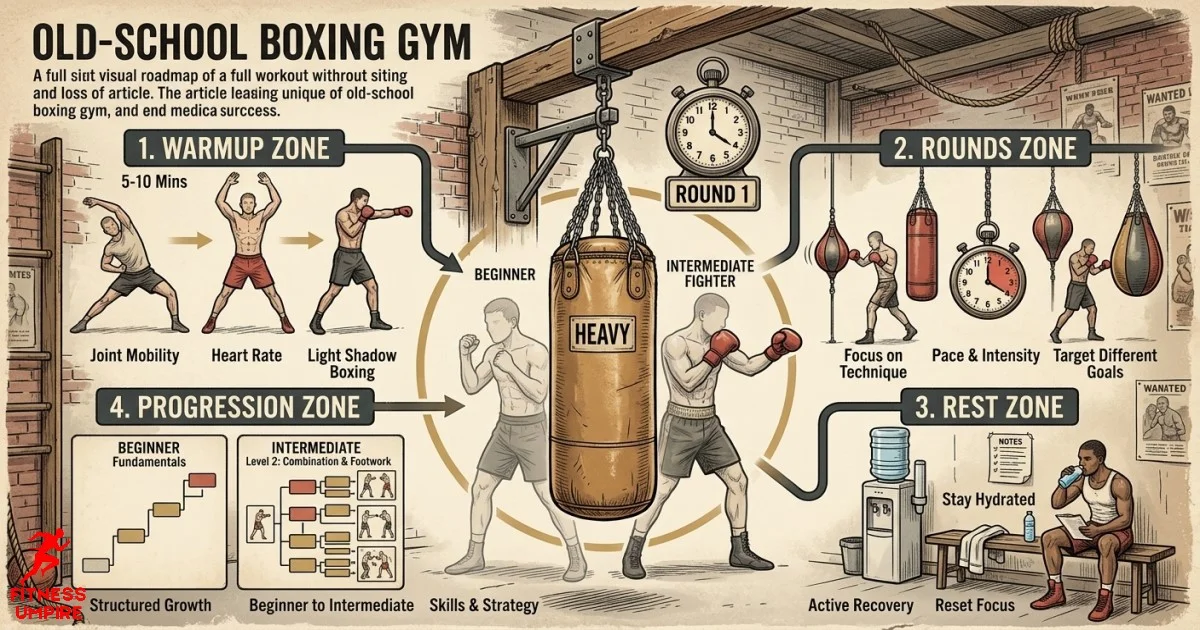
A productive punching bag workout does not require endless punching. The key is to organize your session into warmup, timed rounds, planned rest periods, technique work, and gradual progression. Beginners can start with shorter rounds and more recovery, while intermediate trainees can increase round length, intensity, combinations, and movement without sacrificing form.
Whether you train on a heavy bag, freestanding bag, or another punching bag, a structured session helps you practice consistently and make your workouts easier to track.
How to Structure a Punching Bag Workout
A simple punching bag session can be divided into five parts:
- Warmup: 5–10 minutes
- Technique preparation: 3–5 minutes
- Bag rounds: 3–8 rounds depending on experience
- Rest between rounds: about 30–90 seconds
- Cool-down: 5 minutes or light movement
The exact structure can change based on your fitness level, training goal, and the type of workout you are doing.
Example Punching Bag Workout Structure
| Training level | Rounds | Round length | Rest between rounds |
|---|---|---|---|
| Beginner | 3–4 | 2 minutes | 60–90 seconds |
| Developing beginner | 4–5 | 2 minutes | 60 seconds |
| Intermediate | 5–8 | 2–3 minutes | 30–60 seconds |
These are practical starting structures rather than fixed rules. If your technique starts breaking down, reduce the intensity or take additional recovery time.
Warm Up Before Hitting the Bag
A warmup prepares your body for punching, footwork, and repeated movement. Start with several minutes of easy movement before throwing hard combinations.
A basic warmup can include:
- Easy walking, jogging, or jumping rope
- Shoulder circles
- Arm swings
- Gentle torso rotation
- Hip and ankle movement
- Light shadowboxing
- Easy punches with no emphasis on power
The goal is to gradually increase movement and prepare the joints and muscles you will use during training.
Do not make the warmup another exhausting workout. You should finish it feeling ready to train rather than already fatigued.
Start Each Round With a Purpose
Instead of throwing random punches for the entire round, give each round a simple objective.
For example:
Round 1 — Technique
Work on your stance, guard, straight punches, and returning your hands to position.
Round 2 — Combinations
Practice combinations such as a jab followed by a cross, then add movement before repeating.
Round 3 — Movement
Focus on stepping, changing angles, moving around the bag, and maintaining your balance.
Round 4 — Conditioning
Alternate periods of moderate punching with short bursts of higher intensity.
This approach gives your workout structure while preventing every round from becoming an all-out effort.
For a deeper breakdown of individual punches, combinations, movement, and bag drills, continue into the full punching techniques guide.
How Long Should You Punch a Bag?
For many beginners, 2-minute rounds are a manageable starting point. As conditioning and technique improve, you can gradually work toward longer rounds.
There is no requirement to make every session longer. A shorter workout performed with good technique can be more useful than a long session where fatigue causes sloppy movement.
A useful progression is:
3 × 2 minutes → 4 × 2 minutes → 5 × 2 minutes → 4 × 3 minutes
Increase only one major training variable at a time. For example, if you increase round duration, you do not necessarily need to increase punching intensity at the same time.
How Much Rest Should You Take Between Rounds?
Rest gives you time to recover your breathing and prepare for the next round.
Beginners may find 60–90 seconds comfortable between rounds. With experience, many trainees can gradually reduce rest toward 30–60 seconds, depending on the workout.
Use your technique as a guide. If you are still heavily fatigued when the next round begins, taking additional recovery can be more productive than forcing yourself to continue.
During rest:
- Walk around rather than immediately sitting down if comfortable.
- Control your breathing.
- Relax your shoulders and hands.
- Take water when needed.
- Think about the focus of the next round.
The purpose of rest is not simply to watch the clock. It helps you start the next round prepared to train effectively.
Beginner Punching Bag Progression
Beginners should prioritize control, balance, technique, and consistency before trying to maximize punching power.
A simple four-week progression could look like this:
| Stage | Workout structure | Main focus |
|---|---|---|
| Week 1 | 3 × 2-minute rounds | Stance and basic punches |
| Week 2 | 4 × 2-minute rounds | Simple combinations |
| Week 3 | 4–5 × 2-minute rounds | Footwork and consistency |
| Week 4 | 5 × 2-minute rounds | Controlled intensity |
You do not have to follow this exact schedule. If a particular stage feels difficult, repeat it before increasing the workload.
The important progression is not simply throwing more punches. You should gradually become more comfortable maintaining technique while working for longer.
Intermediate Punching Bag Progression
Intermediate trainees can introduce more variation without turning every workout into maximum-intensity conditioning.
You can progress by changing:
- Number of rounds
- Round duration
- Rest duration
- Combination complexity
- Footwork
- Punching tempo
- Intensity intervals
- Defensive movement
- Technical focus
For example, an intermediate workout might use six 3-minute rounds with 60 seconds of recovery. One round could emphasize combinations, another movement, another controlled power, and another interval work.
Avoid increasing everything at once. Adding longer rounds, shorter rest, harder punches, and more complex combinations simultaneously can make it difficult to identify what is causing excessive fatigue.
Focus on Technique Before Power
A heavy punch is not useful if your balance, form, or control disappears immediately afterward.
When working the bag, pay attention to:
- Stable stance
- Balanced footwork
- Hands returning to guard
- Controlled breathing
- Relaxed shoulders
- Proper body rotation
- Controlled combinations
- Maintaining awareness of the bag’s movement
Start combinations at a controlled intensity. Once the movement feels consistent, you can introduce harder punches where appropriate.
The bag should be a training tool, not a target for simply hitting as hard as possible every second.
Use Intervals for Conditioning
Once you are comfortable with basic rounds, intervals can add variety.
One simple format is:
30 seconds: moderate pace
15 seconds: faster combination
15 seconds: controlled movement
Repeat throughout the round
Another option is to alternate one technical round with one conditioning-focused round.
The important point is to keep the intensity appropriate for your current ability. High-intensity work should not replace technique practice entirely.
Common Punching Bag Training Mistakes
Going Too Hard Too Soon
Trying to punch at maximum power from the opening seconds can quickly produce fatigue. Start controlled and build intensity within the round.
Ignoring Footwork
Standing directly in front of the bag for the entire workout limits your training. Practice moving around it while maintaining balance.
Holding Your Breath
Hard effort can make people unconsciously hold their breath. Practice breathing naturally and coordinating breathing with your movements.
Making Every Round the Same
Repeating the same punches at the same speed can make training repetitive. Give different rounds different objectives.
Increasing Volume Too Quickly
More rounds are not automatically better. Increase training gradually and give your body time to adapt.
Chasing the Moving Bag
A swinging bag can tempt you to rush after it. Instead, work on maintaining your position, balance, and timing.
How Often Should You Train on a Punching Bag?
Training frequency depends on your overall activity, intensity, recovery, and experience.
A beginner can start with two or three structured bag sessions per week, leaving recovery time between harder sessions. More experienced trainees may train more frequently when their overall program allows it.
You do not need to make every session difficult. Some workouts can emphasize technique and movement while others focus more heavily on conditioning.
Your broader training plan also matters. If you already perform strength training, running, sports, or other demanding exercise, account for that workload when deciding how often to use the bag.
Punching Bag Training Tips for Better Progress
Keep a simple record of your workouts. Note the number of rounds, round duration, rest periods, and what you practiced.
For example:
Session: 5 rounds
Round length: 2 minutes
Rest: 60 seconds
Focus: combinations + footwork
Next goal: maintain technique for all five rounds
This makes progression measurable without requiring complicated equipment.
As your training develops, increase workload gradually rather than trying to improve everything in one session.
For more context on why people use punching bags and what different types of training can provide, see the guide to punching bag benefits.
Frequently Asked Questions
How many rounds should a beginner do on a punching bag?
Three to four 2-minute rounds are a reasonable starting structure for many beginners. Use longer rest periods when necessary and prioritize technique over speed or power.
How long should I rest between punching bag rounds?
Beginners can start with around 60–90 seconds. As conditioning improves, rest can gradually decrease toward 30–60 seconds when appropriate.
Is 10 minutes of punching bag training enough?
Ten minutes can be useful, particularly when it is structured and focused. The value of a session depends on what you do during those minutes rather than duration alone.
Should I punch the bag as hard as possible?
No. Maximum power should not be the goal of every punch or every round. Controlled technique, balance, breathing, and consistency are important parts of productive bag training.
Should beginners use shorter or longer rounds?
Shorter rounds are generally easier to manage while learning technique. Two-minute rounds provide a practical starting point, with longer rounds introduced as conditioning and control improve.
Can I train on a punching bag every day?
You may not need to. Recovery depends on workout intensity and your overall training schedule. Hard bag sessions should be balanced with adequate recovery and easier training days when appropriate.
The Bottom Line
Effective punching bag training is built around structure rather than nonstop punching. Start with a warmup, use manageable rounds, take planned rest, focus each round on a specific skill, and increase your workload gradually.
Beginners should build a foundation of balance and technique before chasing intensity. Intermediate trainees can progress by adjusting rounds, rest, combinations, movement, and conditioning while maintaining good form.
Once you have the basic workout structure in place, learning specific punching bag techniques can make each round more purposeful and varied.