
Buying Guide · By Scenario ____________________________________
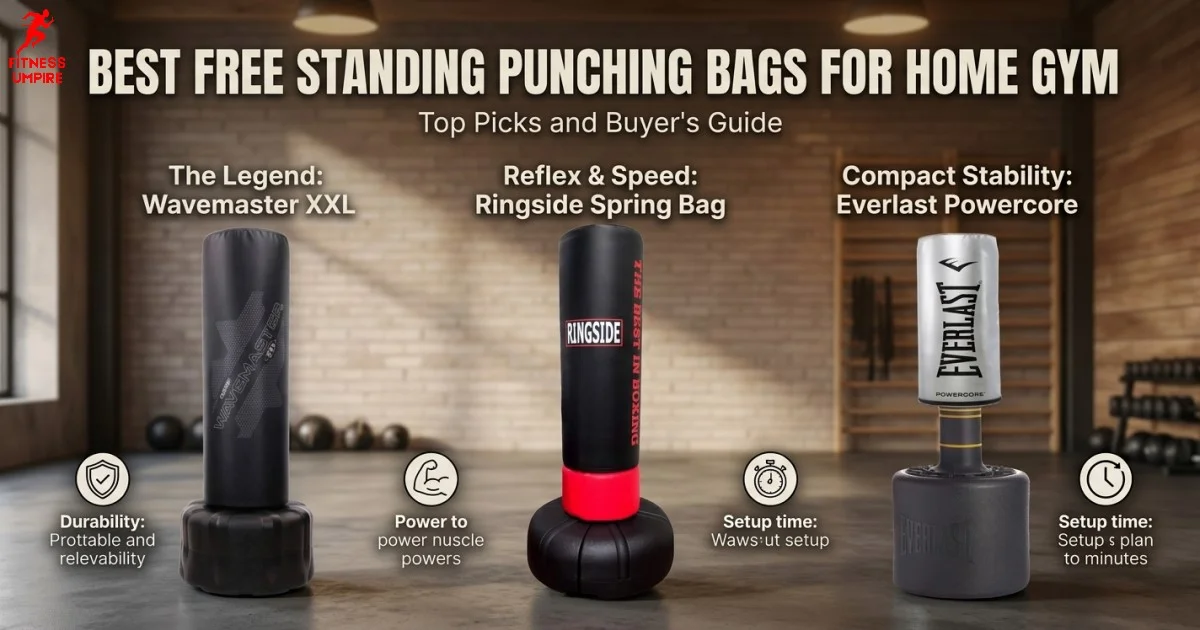
Part of our full freestanding punching bag testing guide
A freestanding bag in an apartment is an isolated piece of equipment you work around. A freestanding bag in a home gym is part of a system — sharing floor space with a rack, a bench, maybe a rower, and expected to hold up to the same training schedule that’s wearing down everything else in the room.
In our main testing guide, we measured base footprint and tracked durability over eight weeks of daily use across all seven bags. This page is about what those numbers mean once you’re planning a room rather than a corner — and once “will it last” matters more than almost anything else.
The shift in priorities ___________________________________________
What Changes When You Have a Dedicated Space
Noise doesn’t disappear as a factor — an attached garage still shares walls with a house, and a finished basement still sits under living space. But it stops being the deciding factor it is for an apartment, and that changes which bags make sense.
The bags that compromise least in a dedicated space are the ones that compromised most for apartment use: the Century Wavemaster XXL and Ringside Elite, both of which rely on larger sand-filled bases for their stability. In a garage or basement, that footprint and weight stop being drawbacks and become exactly what you’re paying for.
What replaces noise as the primary question is durability under frequency. Home gym users tend to train more consistently than anyone else in this guide — often four to seven times a week, for years. A bag that shows early wear at eight weeks under our testing protocol is a bag that’s going to be a problem at month eighteen of real use.
Space planning ___________________________________________________
Footprint — Fitting a Bag Into a Multi-Equipment Room
All seven bags benefit from roughly the same 6-foot-diameter training circle for comfortable striking — kicks and wide hooks need that room regardless of base size. What the base diameter actually affects is how close you can position the bag to a wall, a rack, or other equipment at the edges of that circle.
| Bag | Base diameter | Positioning notes |
|---|---|---|
| Dripex Freestanding Bag | ~16″ | Smallest footprint — easiest to tuck into a corner or against a wall alongside other equipment |
| FITVEN Punching Bag | ~19″ | Compact — works in tighter layouts without much planning |
| RDX Freestanding Bag | ~20″ | Moderate — standard clearance, no special positioning needed |
| Everlast Powercore | ~22″ | Moderate-to-wide — allow a little extra room for the dual-density shell’s give |
| Century BOB XL | ~24″ | Large base and the tallest overall — factor in ceiling height as well as floor space |
| Century Wavemaster XXL | ~24″ | Large — the widest base most home gym layouts will need to plan around |
| Ringside Elite | ~26″ | Largest base, but the lowest profile — sits closer to the floor and feels less obtrusive in a shared space |
Garage & basement floors _________________________________________________
Floor Protection for Concrete
Bare concrete is harder than a wood subfloor — which sounds like it should mean a more stable platform, but in practice often means the opposite. With no give in the floor to absorb impact, a freestanding base can “walk” more on bare concrete than on wood, and the base itself is more prone to scuffing and abrasion over time.
The fix is the same equipment most home gyms already have: interlocking rubber gym tiles or horse stall mats under the bag’s base. This protects both the concrete and the base, and reduces the lateral movement that bare concrete tends to amplify.
The noise-reduction math from our apartment setup guide applies here too — a thicker mat reduces transmitted impact — but the framing is different. In a home gym, you’re protecting your flooring investment and reducing wear on the bag’s base, not managing a neighbor relationship.
The long view _________________________________________
Durability & Long-Term Value
For a bag that’s going to see four-plus sessions a week for years, upfront price tells only part of the story. Here’s how price tier and expected lifespan under daily use line up across the seven bags.
| Bag | Price tier | Expected lifespan | Long-term value note |
|---|---|---|---|
| Century Wavemaster XXL | Premium | 7–10 years | Highest expected lifespan in this guide — premium price spreads to the lowest cost per year of any bag tested |
| Ringside Elite | Premium+ | 8–10+ years | Highest upfront cost, but leather construction and a reinforced base mean it may genuinely outlast everything else here |
| Century BOB XL | Premium | 7–9 years | Shares the Wavemaster’s proven base; durable urethane shell holds up well |
| Everlast Powercore | Mid-range | 5–7 years | Strong mid-tier value — a sensible balance for consistent daily use |
| RDX Freestanding Bag | Mid-range | 5–7 years | Maya Hide shell holds up well; similar value profile to the Powercore |
| FITVEN Punching Bag | Budget | 2–3 years | Lowest upfront cost, but the base showed early stress marks under daily use in our testing |
| Dripex Freestanding Bag | Budget | 2–3 years | Compact design trades durability for footprint — best treated as a secondary or temporary bag |
Our picks _____________________________________
Best Freestanding Punching Bags for a Home Gym
The three bags from our test group that make the most sense for a dedicated, multi-year setup.
01
Top Pick · Home Gym
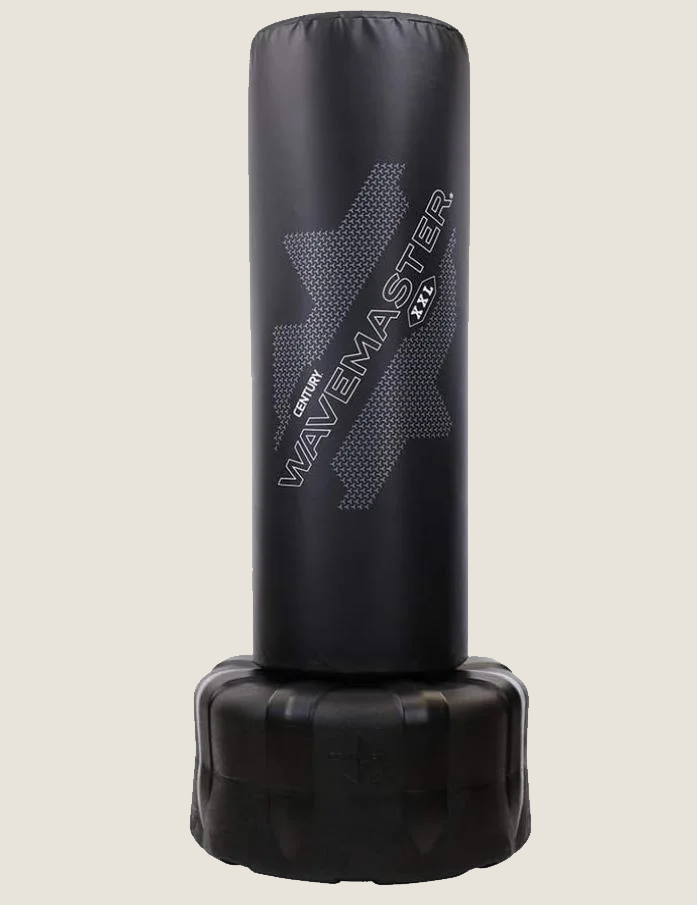
Century Wavemaster XXL
The best all-around fit for a dedicated space — its larger footprint stops being a compromise once you have room to plan around it, and its 7–10 year expected lifespan gives it the lowest cost per year of any bag in this guide. Read the full review →
9.4
OVERALL SCORE
02
Best for High-Frequency Training
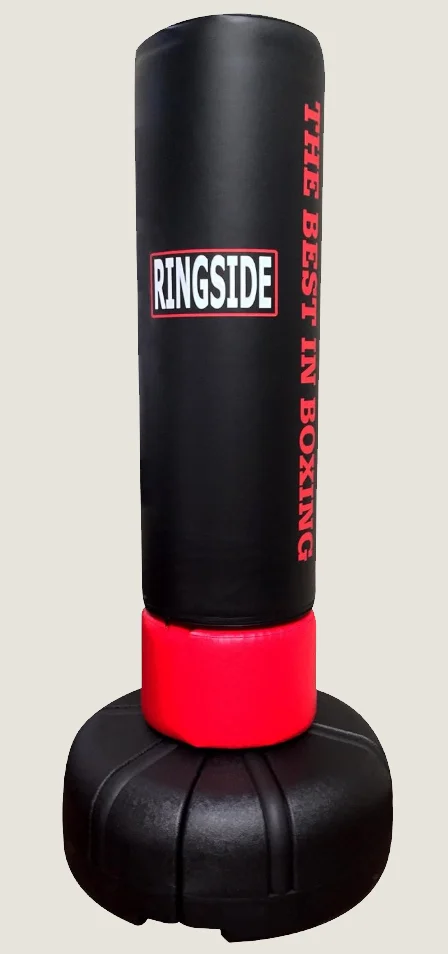
Ringside Elite Freestanding Bag
If you’re training hard, often, and for years, the Ringside Elite’s leather construction and reinforced base are built for exactly that load. The highest upfront cost in this guide, but potentially the longest-lasting bag here too. Read the full review →
9.2
OVERALL SCORE
03
Best for a Shared-Wall Garage
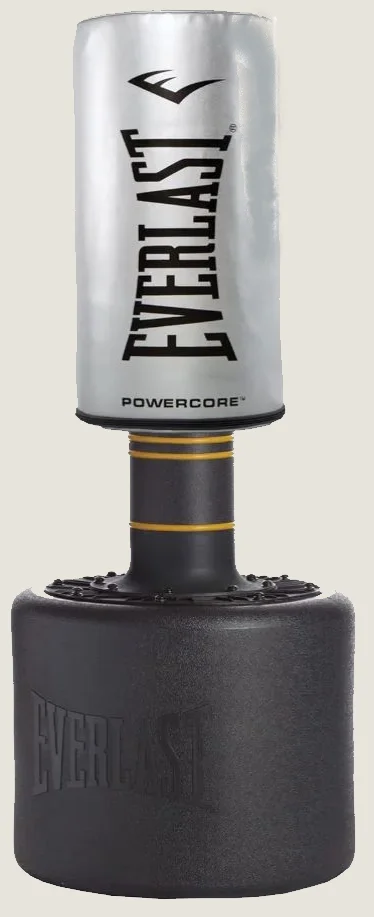
Everlast Powercore Freestanding Bag
If your “home gym” is an attached garage or a basement under a bedroom, the Powercore’s quieter dual-density shell bridges the gap between home gym durability and apartment-level noise control — see our apartment guide for the full noise comparison. Read the full review →
8.7
OVERALL SCORE
If you only read one line
For a dedicated space you’ll use for years, the Century Wavemaster XXL offers the best balance of footprint, stability, and long-term value — step up to the Ringside Elite if training frequency and intensity are both high.
What to skip ________________________________________________
What to Avoid for a Dedicated Home Gym
The FITVEN and Dripex bags are excellent starting points — see our beginner’s guide for where they make the most sense. But “home gym” implies years of consistent use, and both showed early signs of base wear within just eight weeks of daily training in our testing.
That’s not a deal breaker for someone testing whether a habit will stick. It is a real consideration for a space you’re building around the assumption that the equipment in it will still be there in three years.
Think twice for a multi-year setup
FITVEN Punching Bag — excellent value as a starter bag, but base showed early stress marks under daily use.
Dripex Freestanding Bag — compact and easy to live with, but durability under sustained heavy use is the open question.
FAQs ___________________________________________
Home Gym Punching Bags — Frequently Asked Questions
How much space do I need for a freestanding punching bag in a home gym?
Plan for roughly a 6-foot-diameter training circle regardless of which bag you choose — that’s the room needed for kicks and wide punches, not just the base itself. Base diameter ranges from about 16 inches (Dripex) to 26 inches (Ringside Elite) and mainly affects how close you can position the bag to a wall or other equipment at the edge of that circle.
Can I put a freestanding punching bag on a concrete garage floor?
Yes, but a mat is strongly recommended. Bare concrete has no give, which can make a base walk more than it would on a wood subfloor, and concrete can abrade the base over time. Interlocking rubber gym tiles or horse stall mats — common in home gyms already — solve both problems.
Is it worth buying a premium freestanding bag for a home gym?
For frequent, long-term use, generally yes. The Century Wavemaster XXL and Ringside Elite carry higher upfront prices but expected lifespans of 7–10+ years under daily training, which works out to a lower cost per year than budget bags that may need replacing within 2–3 years of heavy use.
Should I get a freestanding or hanging bag for a home gym?
It depends on what your space offers. If you have structural ceiling access and want maximum power-training feedback, a hanging bag has real advantages — covered in our freestanding vs. hanging comparison. If you want zero installation and the flexibility to reposition or remove the bag later, freestanding remains the more practical choice for most home gyms.
How often should I replace a freestanding punching bag?
It depends heavily on the bag and how often you train. Budget bags under daily use may show base wear within 2–3 years, while premium bags with reinforced bases and durable shells — like the Wavemaster XXL or Ringside Elite — can last 7–10 years or more under the same conditions. Inspecting the base and shell every few months is the best way to catch wear before it becomes a stability issue.
Want the full picture?
See how all seven bags scored across stability, durability, and value — plus our complete buyer’s guide and head-to-head comparisons.

David Paul
Founder & Lead Equipment Tester — fitnessumpire.com
David has been training in boxing and martial arts for over a decade. He founded Fitnessumpire after finding that most online punching bag reviews were written without any real hands-on testing — and that the freestanding bag category was the worst offender.
Testing note: Every bag reviewed on this site was purchased at retail price and tested through an 8-week protocol — 500+ strikes per session, lateral shift measurements at both water and sand fill, decibel readings on hardwood and rubber mat, and weekly durability inspections. No manufacturer samples were accepted.
10+ years boxing & martial arts
7 bags independently tested
500+ strikes per bag
8-week test protocol