
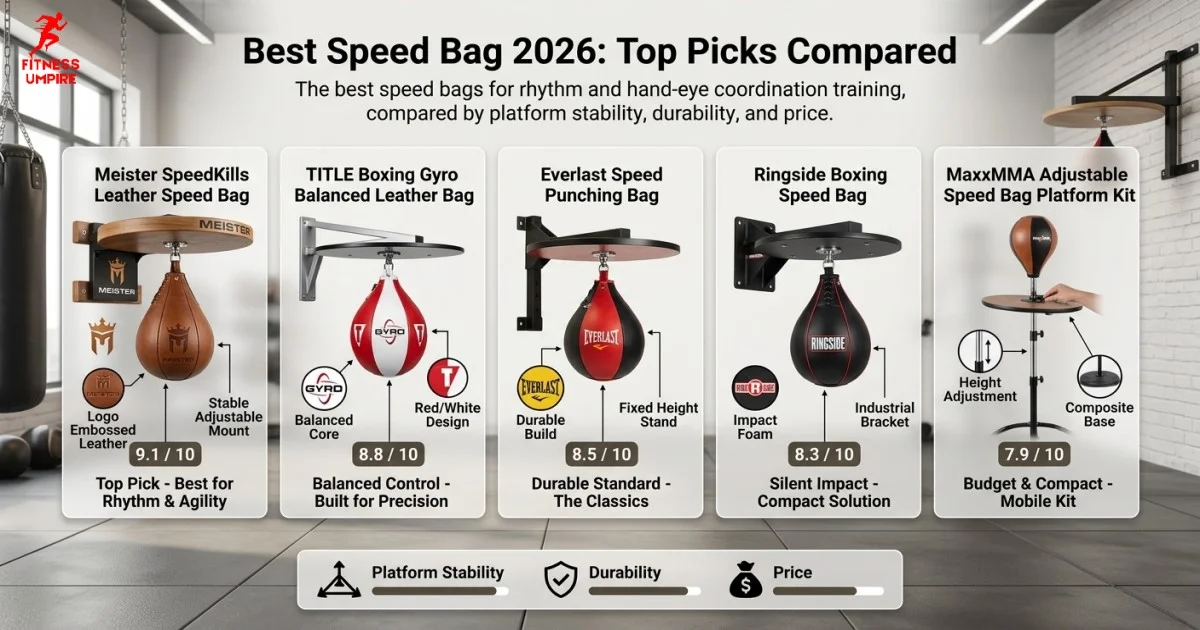
A speed bag is one of the simplest pieces of boxing equipment, but it’s also one of the easiest to get wrong. The wrong bladder material loses air within weeks. The wrong size fights your rhythm instead of building it. And no bag — no matter how well made — performs well on a platform that flexes or wobbles.
Quick answer: For most home users, a leather speed bag with a latex bladder in a mid-size (roughly 8–9 inches) offers the best balance of rebound speed and durability. If you’re setting up a home gym from scratch and don’t already own a platform, a bag-and-platform kit is the simpler buy, since bag and mount compatibility is the single biggest cause of poor rebound.
Best Speed Bags at a Glance
| Product | Material | Bladder | Best For |
| Meister SpeedKills Leather Speed Bag | Full-grain cowhide leather | Latex | Intermediate/advanced, best all-around rebound |
| TITLE Boxing Gyro Balanced Leather Speed Bag | Top-grade leather | Butyl rubber | Best air retention, gym/frequent use |
| Everlast Speed Punching Bag | Synthetic/nylon panel | Latex | Beginners, budget |
| Ringside Boxing Speed Bag | Leather, triple-stitched | Latex | Durability-focused buyers |
| MaxxMMA Adjustable Speed Bag Platform Kit | Leather/synthetic bag + wood platform | Latex | First-time buyers with no existing platform |
The Picks, In Detail
1. Meister SpeedKills Leather Speed Bag
Made from full-grain cowhide leather with a gyro-balanced shape, this is the bag most frequently cited as the top all-around pick across boxing gear reviewers. The leather holds its shape well after break-in, and the balanced construction keeps rebounds consistent rather than veering off-center.
Pros:
- Genuine leather construction;
- consistent, predictable rebound;
- available in multiple sizes to match skill level.
Cons:
- Leather requires a short break-in period before rebound feels fully “true”;
- costs more than synthetic options.
2. TITLE Boxing Gyro Balanced Leather Speed Bag
TITLE’s speed bag swaps the more common latex bladder for butyl rubber, which holds air noticeably longer — a real advantage if you train daily and don’t want to top off pressure every week. Triple-stitched seams add to its reputation as a gym-durability option.
Pros:
- Butyl bladder holds pressure longer than latex;
- triple-stitched seams;
- sized options for different hand speeds.
Cons:
Butyl rebounds slightly slower than latex out of the box, which some advanced users notice.
3. Everlast Speed Punching Bag
Everlast’s entry-level bag uses a synthetic panel design with reinforced nylon webbing instead of leather, which keeps the price accessible for anyone unsure whether speed bag training will stick as a habit. It’s rated for beginner-to-intermediate use rather than heavy daily rotation.
Pros:
- Budget-friendly (around $35)
- widely available
- good for beginners still building rhythm
Cons:
- Synthetic material doesn’t hold up as long under daily advanced use as leather;
- rebound is less precise than premium leather bags.
4. Ringside Boxing Speed Bag
Ringside’s bag leans on leather construction and triple-stitched seams for longevity, with a rapid recoil that competitive reviewers place near the top of the category. It’s a solid middle ground between Everlast’s budget build and Meister’s premium leather.
Pros:
- Triple-stitched durability
- fast, responsive recoil
- multiple sizes available
Cons:
- Fewer color/style options than some competitors;
- still needs a properly mounted platform to perform at its best.
5. MaxxMMA Heavy Duty Adjustable Speed Bag Platform Kit
If you don’t already own a platform, buying a bag alone doesn’t solve the actual problem — a loose or DIY-mounted platform is the most common reason a speed bag feels “dead.” This kit pairs a height-adjustable 24-inch platform with a speed bag and swivel in one purchase, which removes the mount-compatibility guesswork entirely.
Pros:
- Complete setup in one purchase
- height-adjustable for different users
- solves platform stability issues that hurt bag-only buyers
Cons:
- Bag quality in the included kit is not as premium as a standalone leather bag
- Takes more space and installation effort than a bag alone
Buying Criteria: What Actually Matters
Platform Mount
The platform is what gives a speed bag its rebound — not just the bag itself. A flimsy board or a bag mounted directly to drywall will vibrate, slow the rebound, and eventually work loose. Before buying a bag, confirm:
- Whether you’re mounting to a wall stud, a freestanding frame, or an all-in-one platform kit
- Whether the swivel is ball-bearing (smoother rotation) or a simple hook (cheaper, but less precise)
- Whether the platform height is adjustable, since bag height should sit roughly at eye level or slightly above
Bladder Material
The bladder is the inner air chamber, and it’s the single biggest factor in how long a bag lasts before it needs replacing or refilling.
- Latex bladders rebound faster and feel livelier but lose air pressure faster and can be more prone to small leaks over time.
- Butyl rubber bladders hold air longer between fill-ups and are generally more puncture-resistant, at a small cost to rebound liveliness. Neither is “wrong” — latex suits users who want maximum speed and don’t mind occasional top-offs; butyl suits users who train often and want to inflate less frequently.
Size
Speed bags are typically sized by their vertical length, and size affects both rebound speed and how forgiving the bag is for a beginner:
- Smaller bags (around 6–7 inches): Faster rebound, less forgiving — better suited to advanced users with established rhythm.
- Mid-size bags (around 8–9 inches): The most common all-around size; slower rebound than a small bag, more room for error while learning timing.
- Larger bags (10+ inches): Slowest rebound, most forgiving — often recommended as a starting size for absolute beginners.
How to Choose the Right Speed Bag for You
- Check your platform situation first. If you don’t already have a stable platform, budget for a kit rather than a standalone bag.
- Match bladder type to your training frequency. Train daily → butyl. Train a few times a week and enjoy fast rebound → latex.
- Size down as your skill improves. Most beginners do better starting with a larger, more forgiving bag and moving to a smaller one as their timing tightens up.
- Decide how much break-in time you’re willing to invest. Leather bags need a short break-in period to reach their best rebound; synthetic bags perform close to “final” rebound out of the box but don’t last as long under heavy use.
Common Mistakes
Buying a bag before checking the platform. A great bag on a weak mount will still feel sluggish and inconsistent — the platform matters as much as the bag itself.
Assuming bigger is always better for beginners. A larger bag is more forgiving, but sticking with it too long can slow skill progression; sizing down over time is part of normal development.
Ignoring bladder type. Buyers who train daily and choose a latex bladder often end up re-inflating far more often than they expected — checking bladder material before buying avoids this.
Mounting directly to drywall. Speed bag platforms need to anchor into a wall stud or a freestanding frame; drywall alone won’t hold up to repeated impact.
Frequently Asked Questions
Do I need a platform to use a speed bag?
Yes. A speed bag needs a stable, properly mounted platform to rebound correctly — mounting it to an unstable surface significantly reduces performance and can damage the wall or bag.
What’s the difference between a latex and butyl bladder?
Latex bladders rebound faster but lose air pressure sooner. Butyl rubber bladders hold air longer and resist punctures better, at a slight cost to rebound speed.
What size speed bag should a beginner buy?
A larger bag, generally 10 inches or more, is typically easier for beginners because its slower rebound gives more time to react and build timing.
How long does a leather speed bag last?
With regular use and proper platform mounting, a quality leather speed bag can last several years; synthetic bags typically wear out faster under heavy daily use.
Can I use a speed bag without boxing experience?
Yes. Speed bag training is commonly used purely for hand-eye coordination and rhythm, independent of boxing skill level.
Conclusion
The best speed bag for most people is a leather bag with a latex bladder in a mid-size range — but the bag is only half the equation. Platform stability and bladder material affect day-to-day performance more than brand name alone, so check your mounting situation and training frequency before choosing a model.