
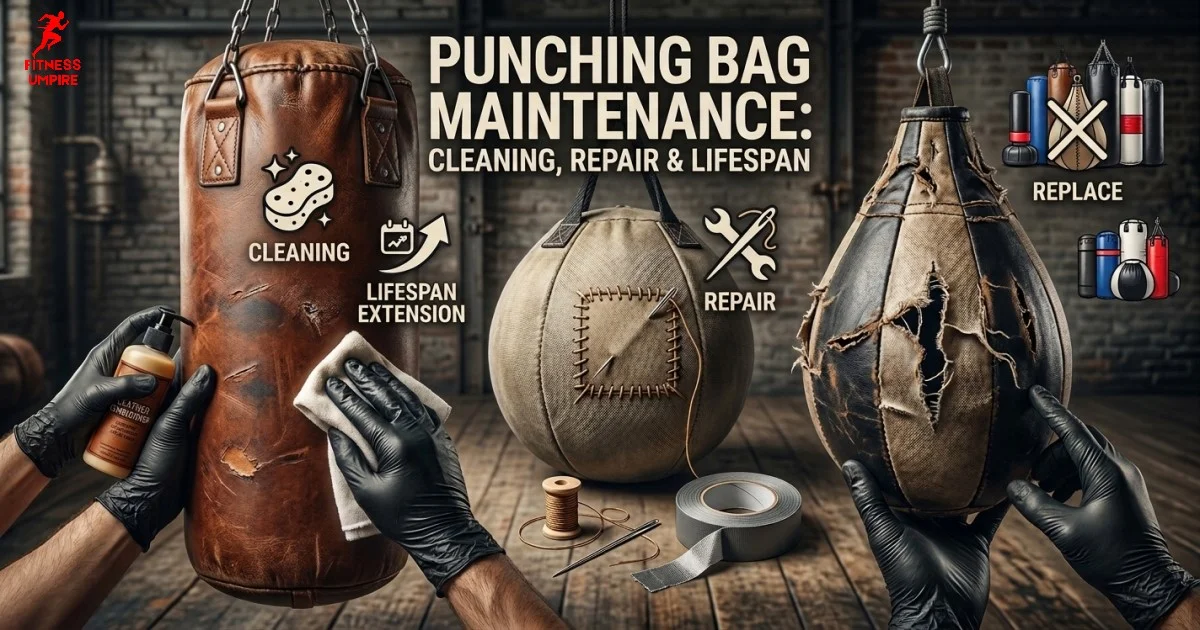
A punching bag can last for years with regular cleaning, proper storage, and occasional maintenance. The basic routine is simple: wipe down the bag after workouts, inspect the shell and straps regularly, keep moisture away, and check a freestanding bag’s base for proper balance and stability.
If the bag develops deep cracks, damaged suspension hardware, severe deformation, or a freestanding base that can no longer remain stable, replacement may be safer and more practical than continued repair.
How Often Should You Maintain a Punching Bag?
A quick wipe-down after training and a more thorough inspection every few weeks are usually enough for routine care.
Your maintenance schedule can look like this:
| Maintenance task | How often |
|---|---|
| Wipe the punching surface | After sweaty workouts or as needed |
| Check for moisture | Weekly |
| Inspect seams, straps, chains, and attachments | Every few weeks |
| Check a freestanding base | Every few weeks |
| Deep clean the exterior | Monthly or as needed |
| Check for unusual deformation or loose filling | Monthly |
| Inspect before heavy training sessions | Before use if the bag shows signs of wear |
The exact schedule depends on how frequently the bag is used, where it is stored, and the material of the outer shell.
How to Clean a Punching Bag
Most punching bags only need simple exterior cleaning. Sweat, skin oils, dust, and moisture can accumulate on the surface over time, particularly on a bag used frequently.
1. Wipe the Surface After Training
After a workout, use a soft cloth to wipe down the areas that received the most contact.
Pay particular attention to:
- The front and sides of the bag
- Areas where your gloves repeatedly make contact
- Seams and stitching
- Handles or straps
- The lower section of the bag
- Any areas where sweat has accumulated
Allow the surface to dry before covering or storing the bag.
2. Use a Mild Cleaning Solution
For routine cleaning, a damp cloth and mild soap solution are generally sufficient for many synthetic leather, vinyl, and similar punching-bag surfaces.
Do not saturate the bag. Excess water can work its way into seams, stitching, or other openings and may contribute to odor or material deterioration.
Always follow the cleaning instructions supplied by the manufacturer because different exterior materials can require different care.
3. Avoid Harsh Chemicals
Strong solvents, abrasive cleaners, and aggressive scrubbing can damage the outer material or its finish.
Instead, use:
- A soft cloth or sponge
- A small amount of mild cleaner when appropriate
- A second damp cloth to remove residue
- A dry cloth to finish
Do not assume that a household cleaner is suitable simply because it works on another type of synthetic material.
4. Let the Bag Dry Completely
Moisture is one of the easiest maintenance problems to overlook.
After cleaning or a particularly sweaty workout, give the bag adequate ventilation. Avoid putting a damp bag immediately into a closed cover, storage area, or poorly ventilated room.
If the bag develops a persistent musty smell, inspect both the exterior and the surrounding storage area for trapped moisture.
How to Maintain a Freestanding Punching Bag Base
Freestanding punching bags have an additional component that hanging bags do not: the base.
The base provides the stability needed when the bag is struck, so keeping it properly filled and positioned is an important part of maintenance.
Check the Base Regularly
Look for:
- Cracks or leaks
- Deformation
- Loose components
- Movement that seems unusual
- Water or other filling material leaking from the base
- A bag that no longer returns to its normal position properly
The exact filling method depends on the model. Some bases are designed to be filled with water, while others can use sand or another specified material.
Follow the manufacturer’s instructions rather than changing the filling material without checking compatibility.
Refilling and Rebalancing a Freestanding Punching Bag
A freestanding bag can feel different when its base is underfilled or its contents have shifted.
If the manufacturer’s design permits the base to be refilled, first inspect it for damage or leaks. There is little benefit in refilling a damaged base without addressing the underlying problem.
When adding the specified filling material:
- Place the base on a level surface.
- Check the manufacturer’s recommended filling method.
- Add the appropriate material gradually.
- Check that the base remains stable.
- Inspect the bag from different angles.
- Test it with controlled strikes before returning to normal training.
What If the Bag Feels Unbalanced?
An uneven or unstable feel does not necessarily mean the bag itself needs replacement.
Check the basics first:
- Is the base adequately filled?
- Is the bag sitting on a level surface?
- Has the base developed a leak?
- Has the filling shifted?
- Is the bag attachment properly secured?
- Is the outer shell becoming permanently deformed?
If the base is damaged or repeatedly loses its filling, repairing or replacing the affected component may be necessary.
How to Prevent Premature Wear
Good maintenance starts before damage occurs.
Use Appropriate Gloves
Training with suitable boxing or martial-arts gloves can reduce unnecessary wear on both your hands and the punching surface. Keep gloves clean and allow them to dry properly rather than placing damp equipment directly against the bag.
Keep the Bag Away From Excess Moisture
Indoor storage is generally easier to control than an exposed outdoor environment. If your punching bag is kept in a garage, basement, shed, or other area where temperature and humidity fluctuate, inspect it more frequently.
Avoid Dragging the Bag
Moving a heavy punching bag by dragging it across the floor can place unnecessary stress on its base, seams, or attachments.
For freestanding models, use the manufacturer’s recommended method for moving the equipment.
Inspect the Suspension System
For hanging bags, maintenance should include the equipment connecting the bag to its mounting point.
Check chains, straps, hooks, swivels, and other attachment components for visible wear or damage. A worn attachment system should not be ignored simply because the punching bag itself still looks good.
Signs Your Punching Bag Needs Repair
Not every visible defect means the entire bag needs replacement.
Minor cosmetic wear can often be monitored, while structural damage deserves more immediate attention.
Watch for:
- Small surface scuffs
- Loose stitching
- Minor seam separation
- Changes in the bag’s shape
- Uneven filling
- Loose straps
- Damaged chains or attachment hardware
- A freestanding base that feels less stable than before
- Cracks or leaks in the base
Address problems early when possible. A small maintenance issue can become a much larger problem if the bag continues to receive heavy impact.
When Should You Replace a Punching Bag?
A punching bag is generally ready for replacement when continued use is no longer practical or when important structural components are significantly damaged.
Consider replacing the bag if you notice:
Severe Shell Damage
Large tears, extensive cracking, or significant separation around seams can expose the internal filling and make the bag increasingly difficult to maintain.
Permanent Severe Deformation
Some compression and changes in shape can occur with repeated use. However, severe deformation that affects how the bag responds to strikes can be a sign that the bag has reached the end of its useful life.
Damaged Suspension Components
A bag with seriously damaged straps, chains, hooks, or other load-bearing components should not simply be kept in service because the exterior still looks acceptable.
Depending on the design, an individual component may be replaceable. Check the manufacturer’s replacement-parts information before replacing the entire bag.
A Freestanding Base That Will Not Stay Stable
If a base repeatedly leaks, cannot maintain its intended filling level, or has structural damage that affects stability, replacing the damaged equipment may be more sensible than continuing to use it.
Persistent Odor or Moisture Problems
A surface can usually be cleaned, but persistent moisture or odor that cannot be resolved may indicate a deeper maintenance problem.
Common Punching Bag Maintenance Mistakes
Several simple mistakes can shorten the useful life of a punching bag.
Leaving sweat on the surface: Regular contact with sweat and dirt without cleaning can accelerate surface deterioration.
Storing the bag while wet: Trapped moisture can create odor and contribute to material problems.
Ignoring loose stitching: A small seam problem can become larger with repeated impacts.
Using unsuitable cleaning chemicals: Aggressive products can damage certain synthetic materials.
Ignoring the base: Freestanding bags depend on a properly maintained base for stability.
Continuing to use severely damaged equipment: Cosmetic wear is one thing; structural damage is another. Inspect the bag and its attachments before continuing heavy training.
How to Make Your Punching Bag Last Longer
The most effective maintenance routine is not complicated.
After training, wipe away sweat and allow the bag to dry. Every few weeks, inspect the shell, seams, straps, attachment hardware, and base. Keep the equipment in a suitable environment and follow the manufacturer’s instructions for cleaning and filling.
When damage appears, determine whether it is cosmetic, repairable, or structural. Replacing a worn component can sometimes extend the life of the equipment, while serious structural damage can make replacement the more appropriate option.
If your punching bag has reached the end of its useful life, see our guide to the best punching bags to compare replacement options based on different training needs and setups.
Frequently Asked Questions
How often should I clean my punching bag?
Wipe the surface after sweaty training sessions and perform a more thorough cleaning when dirt, sweat, or residue builds up. The exact frequency depends on how often you train and the environment where the bag is stored.
Can I use household cleaner on a punching bag?
Not necessarily. Cleaning products can affect different exterior materials differently. Check the manufacturer’s care instructions and use a mild cleaning method appropriate for the bag’s material.
Can a freestanding punching bag be refilled?
Some freestanding punching-bag bases are designed to be filled or refilled, but the permitted filling material varies by model. Check the manufacturer’s instructions before adding water, sand, or another material.
Why is my freestanding punching bag leaning?
A leaning bag can have several causes, including an uneven floor, an inadequately filled base, shifted filling, or damage to the bag or base. Inspect these areas before assuming the entire bag needs replacement.
How do I know if a punching bag is worn out?
Look for severe shell damage, major seam separation, permanent deformation, damaged load-bearing attachments, or a freestanding base that can no longer remain stable. Minor cosmetic wear alone does not necessarily mean the bag needs replacement.
Can I repair a torn punching bag?
The answer depends on the location and severity of the damage and the bag’s construction. Minor surface problems may be repairable, while extensive damage to seams, suspension points, or other structural areas may justify replacement.
How can I prevent my punching bag from smelling?
Wipe away sweat regularly, keep the exterior dry, provide adequate ventilation, and avoid storing the bag while it is wet. Also allow gloves and other training equipment to dry rather than leaving damp equipment against the bag.
Final Maintenance Checklist
A few minutes of regular care can help keep a punching bag usable for much longer.
- Wipe the surface regularly.
- Remove sweat and dirt before storage.
- Let the bag dry completely.
- Follow the manufacturer’s cleaning instructions.
- Inspect seams and stitching.
- Check hanging straps, chains, and other attachment hardware.
- Inspect freestanding bases for leaks or damage.
- Keep the base properly filled according to the manufacturer’s instructions.
- Watch for unusual deformation or instability.
- Repair appropriate minor problems early.
- Replace equipment when structural damage makes continued use impractical.